
Gear & Technique
In September 2026, Canon Portugal and Canon Spain kindly lent me the RF100-500mm F4.5-7.1 L IS USM for a month on the road. I took it to Spain, Germany, Italy and Slovenia, places where I regularly run photography workshops. Here is my full review.
It’s a lens most people think of for sport and wildlife. My trip had nothing to do with either. I used it for one thing only: landscape.
Lens
Canon RF100-500mm F4.5-7.1 L IS USM
Lent by
Canon Portugal and Canon Spain
Where
Spain, Germany, Italy and Slovenia, over one month
Focal lengths I used most
Between 300mm and 500mm
Sweet spot
f/8
Weight
About 1.4 kg; about 1.5 kg with the tripod ring
Weather
Rain, low cloud, fog and cold, with no problems
Drawback
The control ring sits right against the camera mount
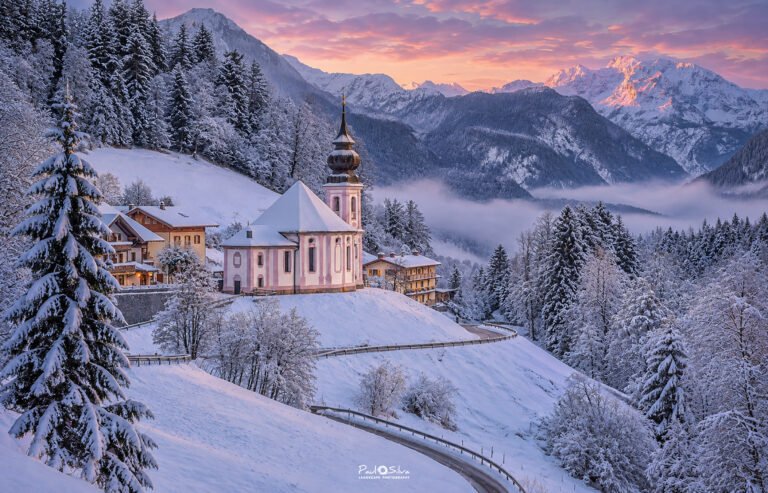
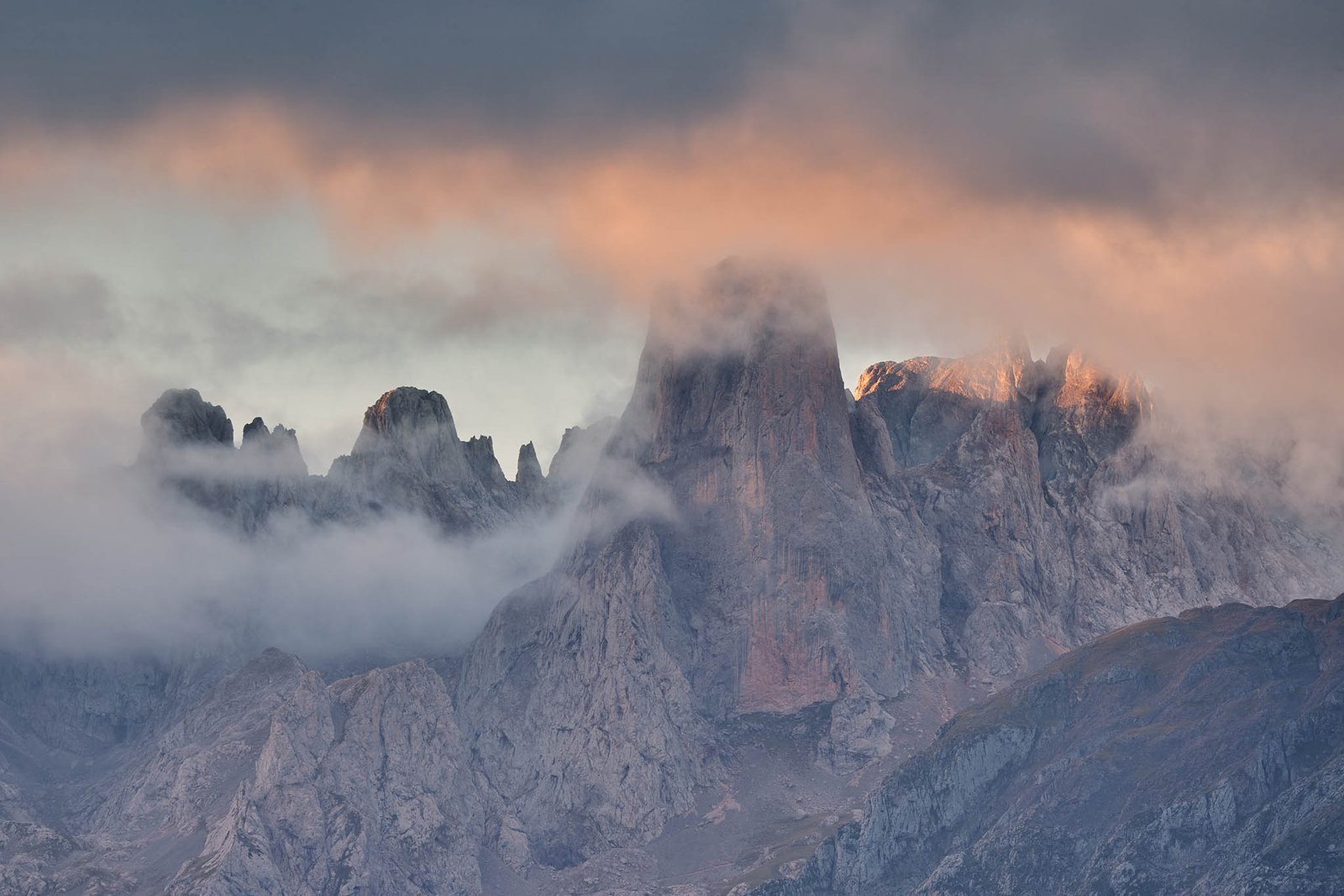
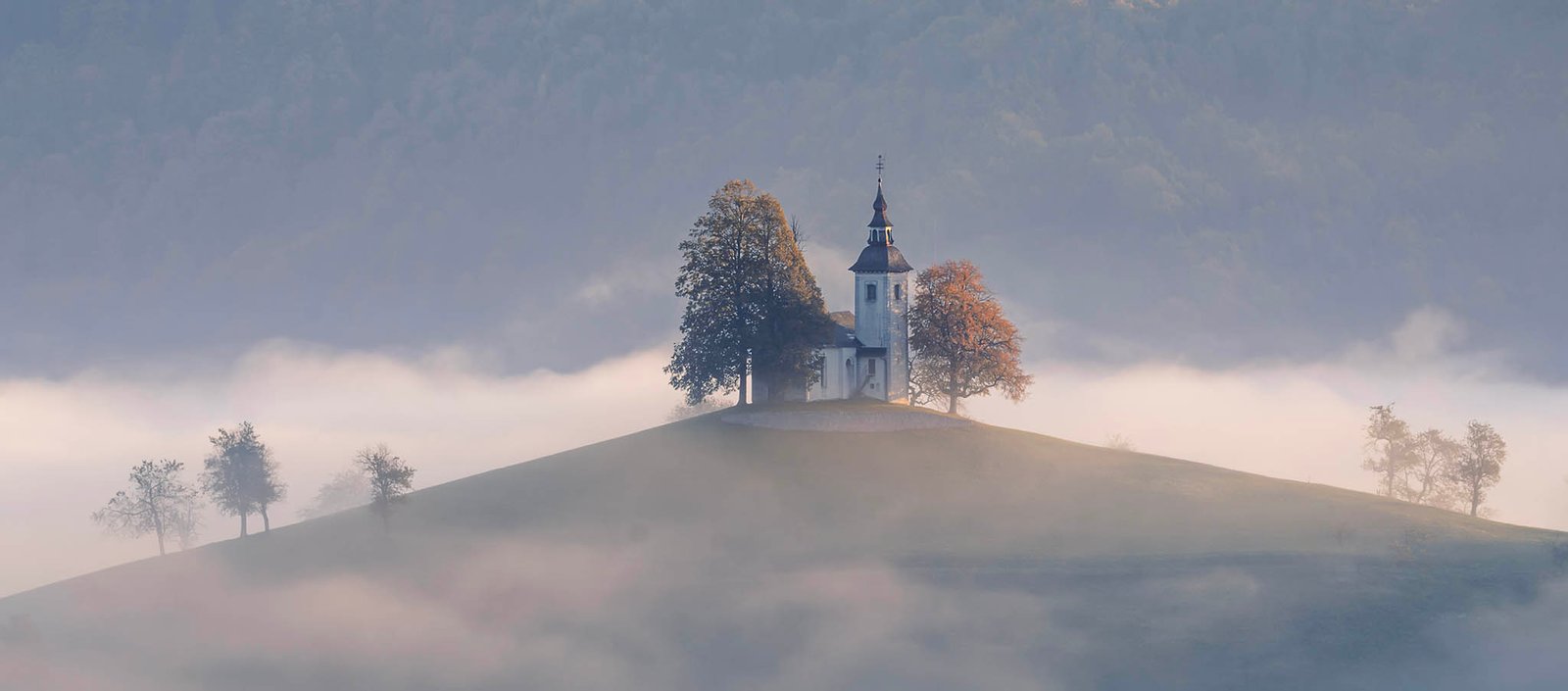
My kit already includes the RF70-200mm F4 L IS USM, and for most of my landscape work it does the job. But a lens that reaches 500mm, with this level of quality, opens up something different. It shows you a world you can’t see with the naked eye: a lit ridge in the middle of a storm, a small chapel floating above the fog, light moving across a distant rock face.
In a way it feels close to macro photography. You find small, hidden scenes inside a big landscape.
It also reminded me of my RF10-20mm F4 L IS STM. Both are lenses of extremes, at opposite ends, and both make you work harder. You have to look more carefully, simplify and think about every composition. That’s exactly what I enjoy about them.
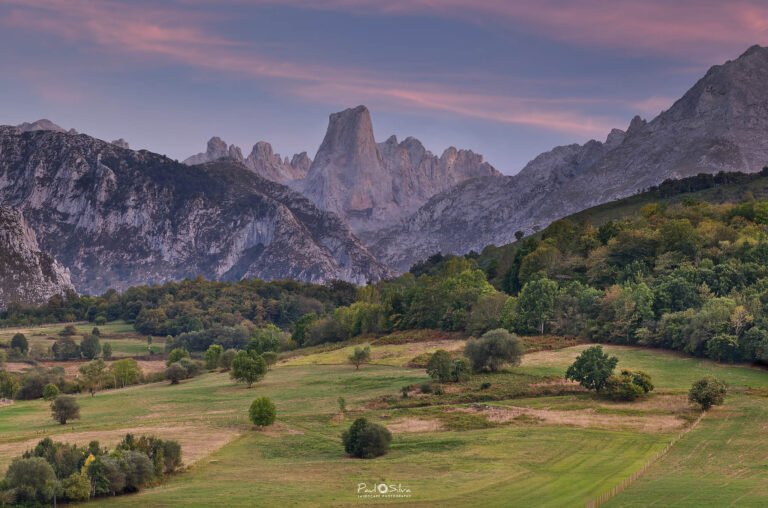
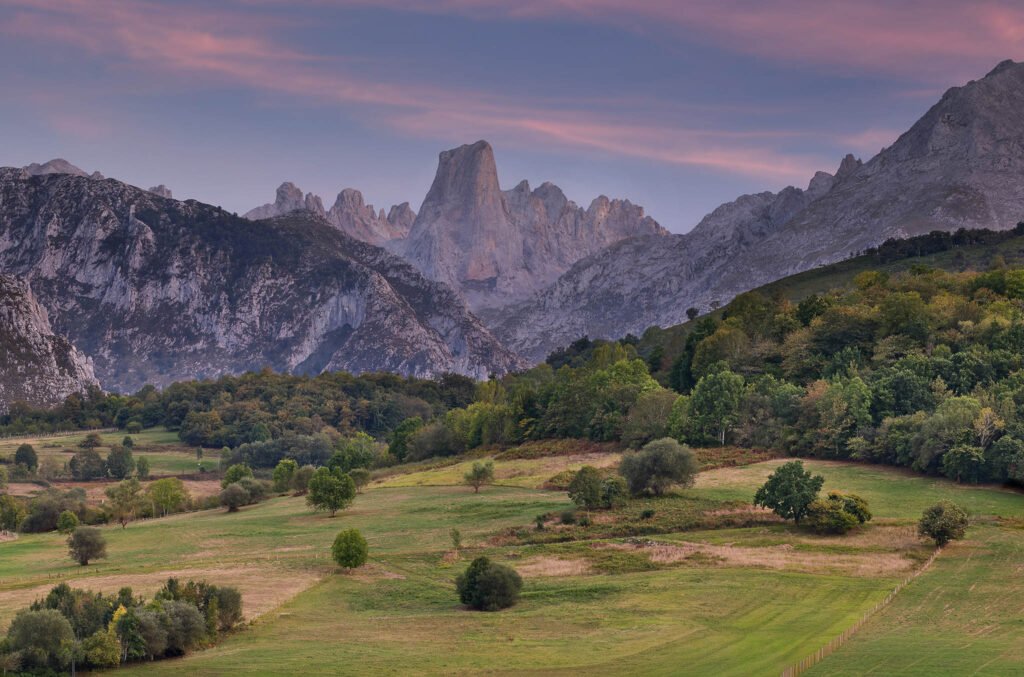
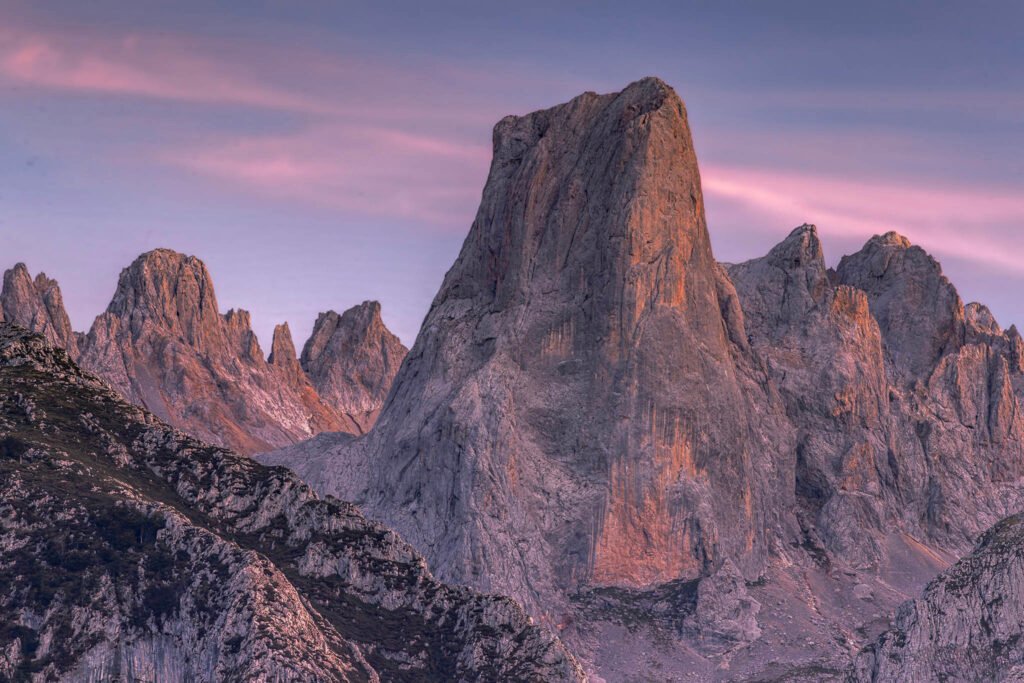
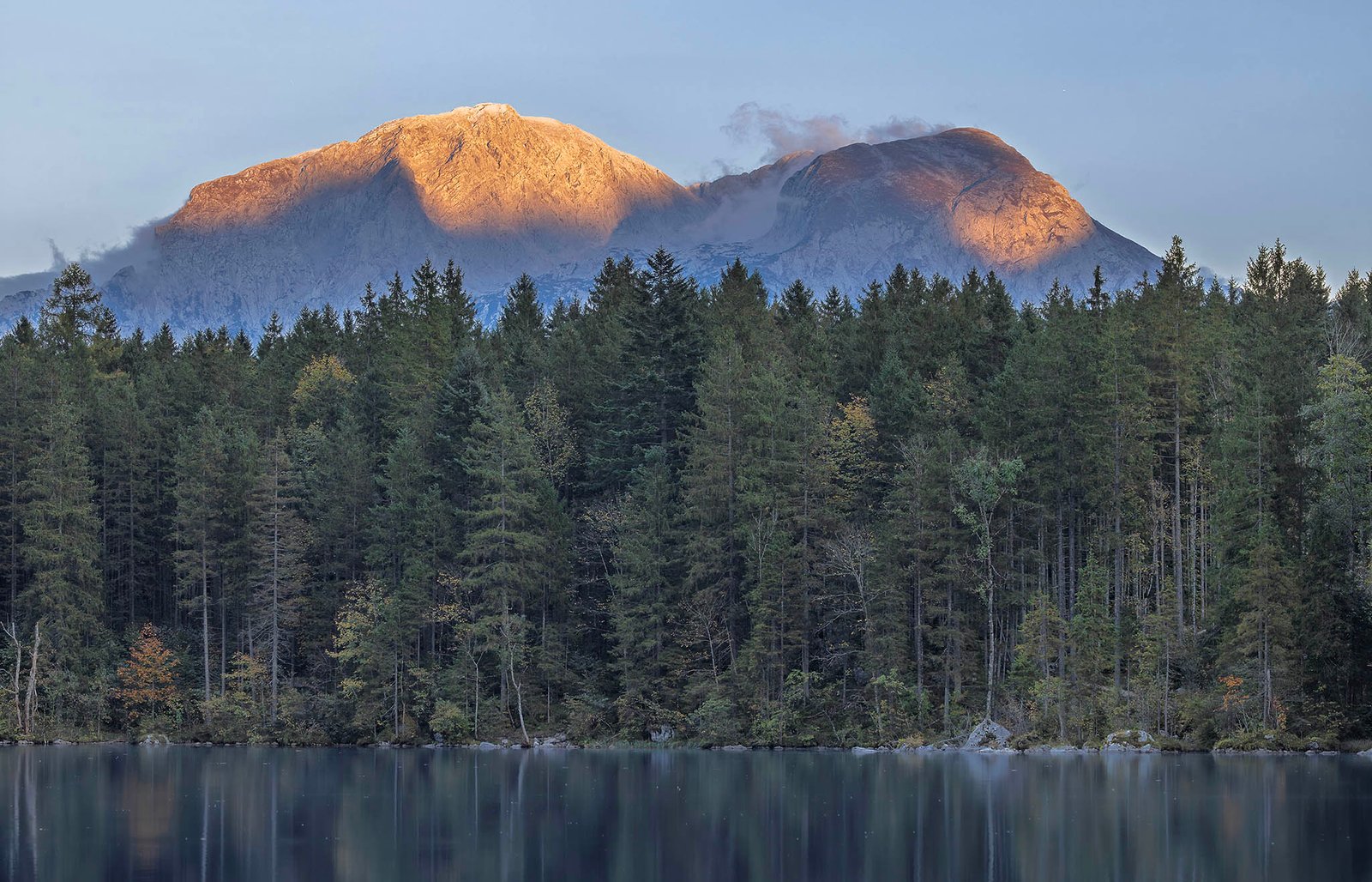
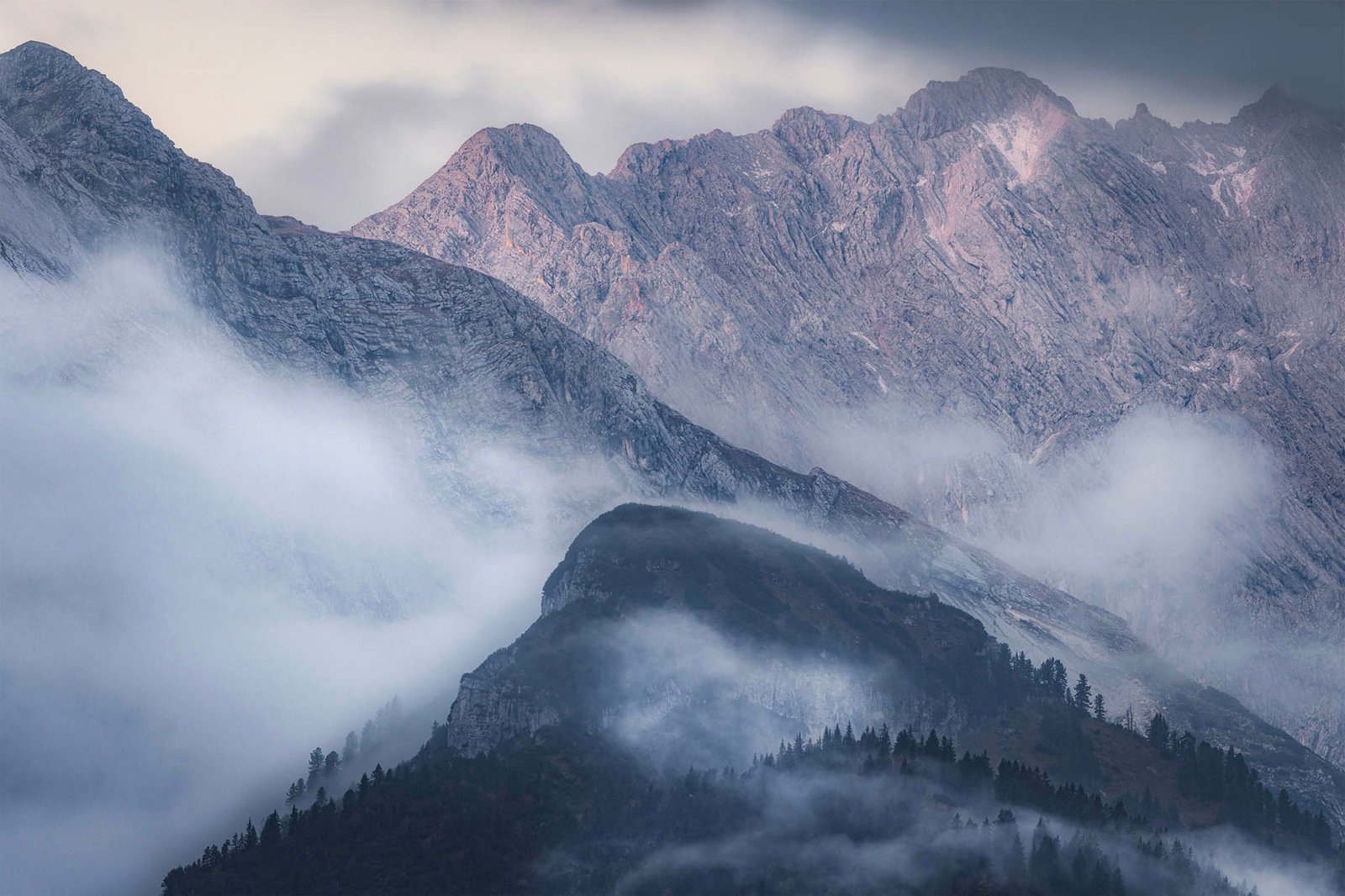
Same peak, two focal lengths on the RF100-500mm: Naranjo de Bulnes, Picos de Europa, Spain
The lens is very sharp, with great contrast and rendering. Honestly, I’d compare it to any of Canon’s L primes. It isn’t a fast lens, but that matters very little in landscape, where you rarely need a wide aperture.
For me the sweet spot is f/8, only a third of a stop down from wide open at 500mm, where the widest aperture is f/7.1. At f/8 the detail is excellent.
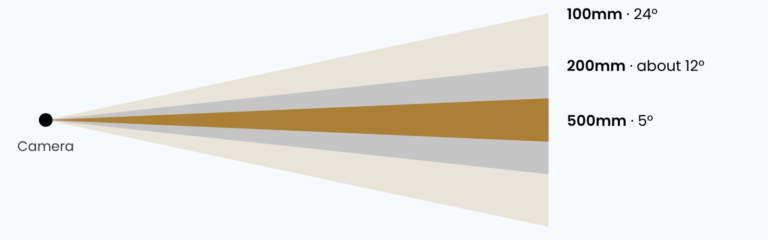
The lens is also perfect for isolating a subject from its surroundings. At 500mm the frame takes in about five degrees of the scene, against roughly twelve at 200mm, so I decide exactly what stays in. With a subject several kilometres away, it’s that narrow view that does the isolating, not the aperture: at that distance everything is sharp at any f-number.
Diagonal angle of view on a full-frame body. Canon quotes 24° at 100mm and 5° at 500mm.
For a lens with this reach, it’s surprisingly light, at around 1.4 kg, or about 1.5 kg with the tripod ring. It fits easily in my backpack without taking up much space, and for someone who travels as often as I do, that makes a real difference. It’s still about twice the weight of my RF70-200mm F4, so it’s a lens I choose to carry rather than one I forget is there.
Over that month I had every kind of weather: rain and low cloud in Germany, changing skies in Italy, and cold, foggy mornings in Slovenia. The lens never gave me a moment of doubt. It’s an L-series lens, weather-sealed and built to be used outdoors.
Technique
None of this is specific to Canon. It applies to any lens in the 400–600mm range.
01
At 500mm the smallest movement shows. Mount the lens on the tripod by its ring rather than by the camera, so the weight sits over the head, and fire with the 2-second timer or a remote. The barrel extends by about 9 cm at the long end, which gives the wind more to push against, so keep the tripod low and use any shelter you can find.
02
Over several kilometres, haze, humidity and heat shimmer soften detail more than any lens does. The clearest air usually comes early in the morning, after rain or on cold days. On a warm afternoon, distant detail rarely holds up.
03
With a long lens the question changes from “what’s the view?” to “where is the light falling?” Before setting up, I scan the scene at the long end and wait for a ridge, a building or a band of mist to catch the light.
04
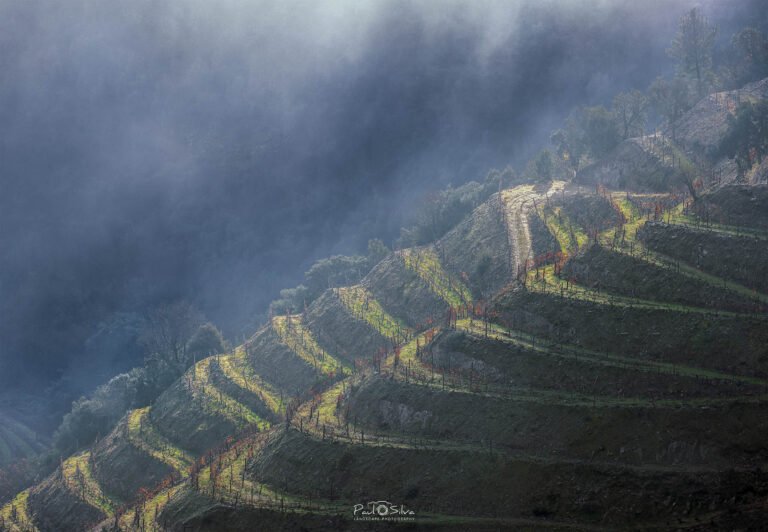
Long focal lengths stack ridges, tree lines and bands of fog on top of one another. On misty mornings that layering often becomes the subject.
The only thing I’d mention is the control ring. It sits close to the camera mount, so it isn’t the easiest to reach, especially if you have large hands. It’s easy to work around, though. I set up my Canon R5 so that I control ISO and exposure from the camera body, which is how I always work anyway.
On the positive side, a separate ring sets how stiff the zoom is, from Smooth to Tight. On Tight, the barrel doesn’t creep when the lens is tilted up or down on a tripod.
If you already find yourself looking for small scenes inside big landscapes and want to go beyond 200mm, it’s a lens I’d recommend. It isn’t for everyone, though:
| Spec | RF100-500mm | RF70-200mm F4 |
|---|---|---|
| Focal range | 100–500mm | 70–200mm |
| Weight | 1,370 g (1,530 g with tripod ring) | 695 g |
| Length | 207.6 mm | 119 mm |
| Widest aperture at the long end | f/7.1 | f/4 |
Most of my work is still done with my two wide-angle lenses, the RF10-20mm F4 L IS STM and the RF15-35mm F2.8 L IS USM. Even so, this month convinced me that the RF100-500mm deserves a place in my bag. It added a new dimension to my portfolio and changed the way I looked at familiar places. It will be my next purchase.
If this slower, more selective way of seeing interests you, I write more about it in my free ebook, The Art of Contemplative Landscape Photography.
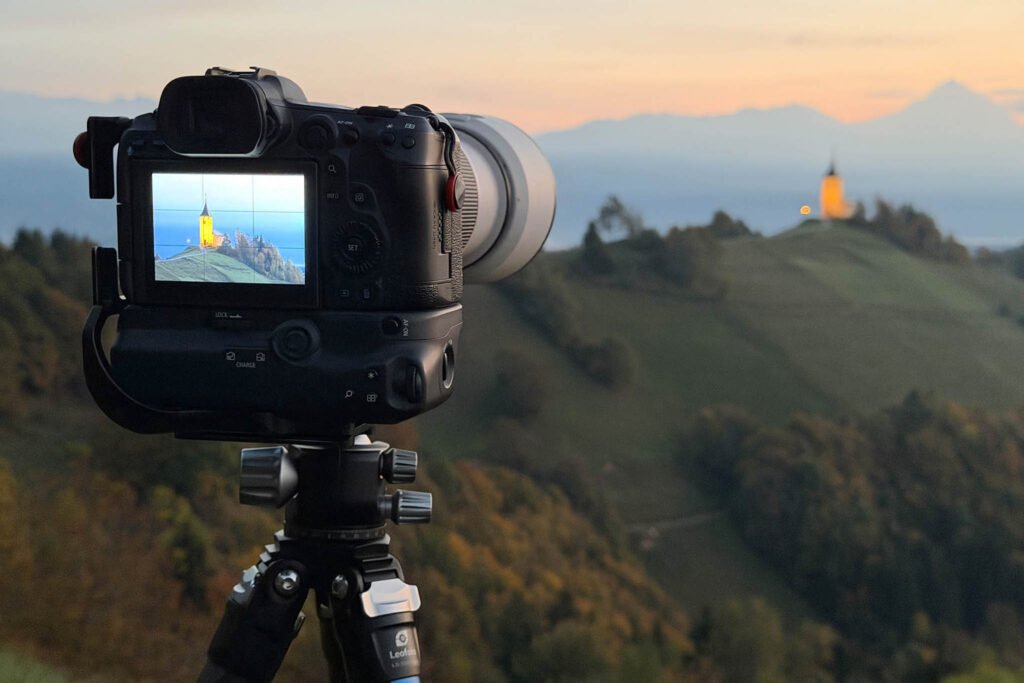
On my Slovenia workshop we photograph St Thomas Church at sunrise, when morning mist often fills the valley below.
A sincere thank you to Canon Portugal and Canon Spain for making this unit available. It was a truly rewarding experience.
Paulo Silva
Free ebook
The Art of Contemplative Landscape Photography